Superman Comic Books
Curt Swan
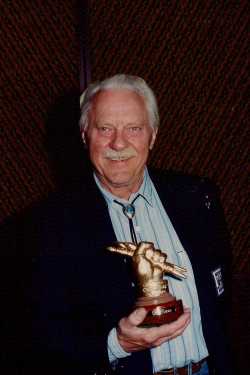 Curt Swan was born February 17th 1920, in Willmar, Minnesota as the youngest of five children of John Swan, a railroad man, and the former Leotine Hanson who had worked in a local hospital. Swan was of Swedish stock; his Grandmother had actually changed the family name from Swanson (not too unlike the Swanderson name that the Curt Swan-Murphy Anderson team adopted in the 70s) to Swan in the late 1890s while they lived in Canada.
Swan grew up admiring the illustrated adventure stories in Colliers and Saturday Evening Post, and demonstrated a talent to draw at an early age, selling his first work, a "big-little book" type of story drawn on the back of a desk calendar, to a classmate in the sixth grade. Throughout school, Curt's abilities to draw were put to constant use by teachers, however, he only dreamed that he would ever make his living as an illustrator.
Following high school, Curt got a job working in the Sears Roebuck warehouse helping the family through the depression. When he turned 18, Swan joined the National Guard, and two years later was called to serve in the Army. Late in 1940, he was inducted into the 34th Division, 135th Infantry. Following basic training, his company moved to Camp Clayborn, Louisiana, and Fort Dix, New Jersey, where he was promoted to sergeant. In 1941, his company was sent to Northern Ireland, where he was stationed at Fintona. It was here that he received his first break as an artist.
While doing a mural for the Red Cross Club, Swan met Dick Wingert who was a cartoonist for STARS AND STRIPES (S&S), the army newspaper. Wingert suggested that Swan contact Colonel Llewellyn, the head of S&S, for a position. Not knowing exactly what he could do at S&S, and not thinking of himself as much of a writer, Curt found someone in the staff good with words and sent Colonel Llewellyn an illustrated letter. Very soon thereafter, Swan was transferred to London serving as a staff artist doing story illustrations, spot drawings, and maps. Swan and Wingert roomed together for the next year. Curt described them as the "Original Odd-Couple": Wingert was "Mr. Filth" and Swan "Mr. Clean".
In late 1943, Swan was transferred to Paris, and found a small apartment near the Eiffel tower. This was an artist dream, and Swan spent hours sketching near the Seine. It was in Paris that Curt decided to marry Helene Brickley. Swan had first met Helene when he was stationed at Fort Dix, where she was working for RCA in Camden, and later in London after she had joined the Red Cross. When they met again, it was as if fate were throwing them together. She was living with a family outside of Paris and their love bloomed. They were married in Paris in 1944.
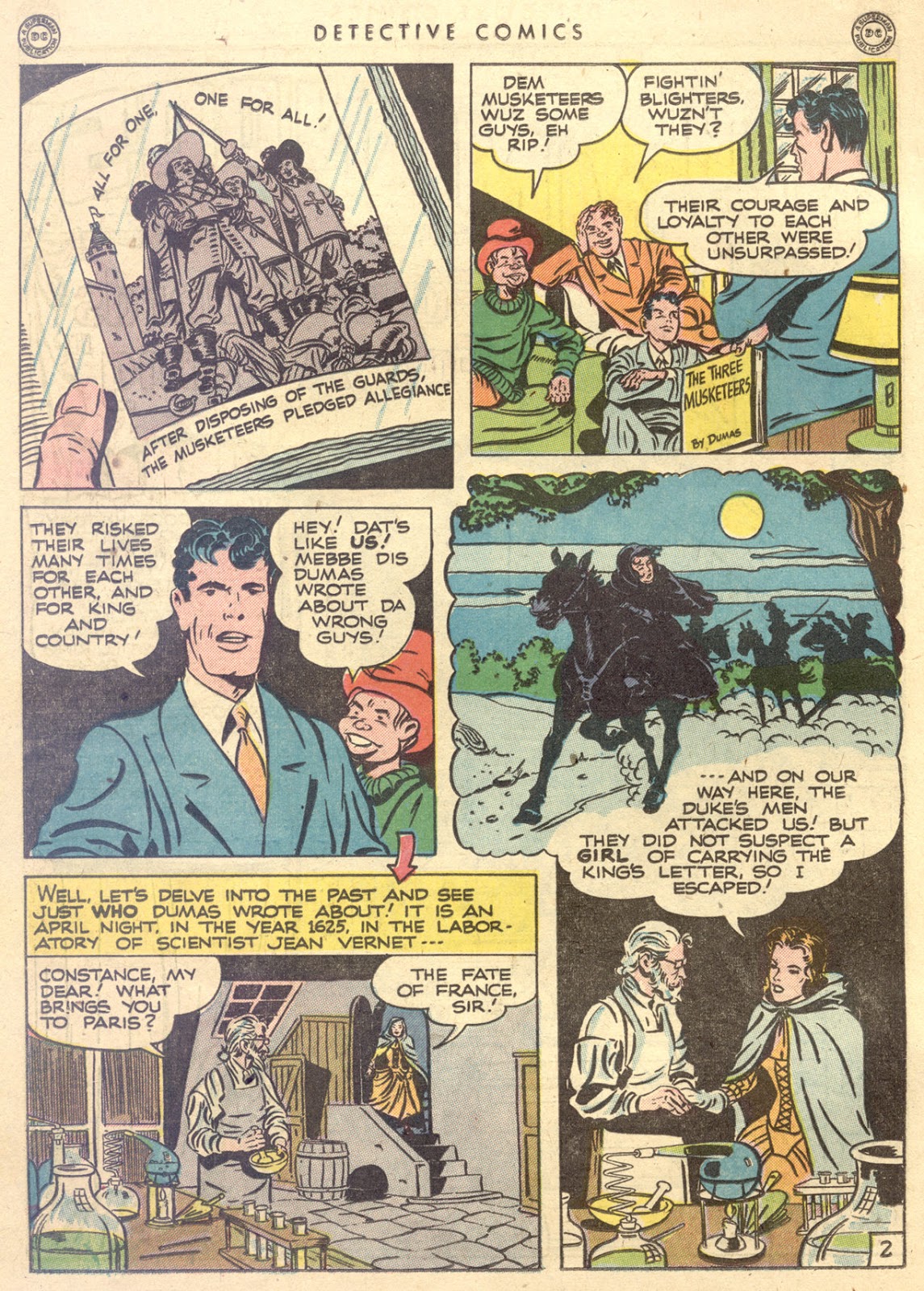 After the war, the newlyweds returned to the states. Curt hoped to find work in the illustration field, and after a short stay in Minneapolis decided that there would be more opportunity in New York city. Several staffers for the S&S were already in New York. France Herron had been a writer for DC prior to World War II, and after serving as a staff writer in Paris returned to work for DC. He suggested that Curt take his samples to Whitney Ellsworth. The interview with Ellsworth was short, but profitable. Swan was given a script for a BOY COMMANDOS story, the former Jack Kirby feature.
Swan returned home to tell his wife that he had been given a whopping $18/page rate, and commented that this would be a good job "for a year or two". Curt felt that the comic book industry had just about run its course. But, it was good money for the time being. Little did he know that he would work in the field for over forty years.
While Swan liked the sound of the page rate he had gotten, he soon discovered how much time it actually took him to do a page. Like many new artists, Swan put too much detail into his work and was disappointed both by how little he could produce, and how it looked after it was inked. Steve Brody, a staff inker for DC, took Swan aside and gave him a few tips to speed Swan's pencils, and to allow the inker to be truer to the drawings. Soon Swan was putting out 3-4 pages a day and had made almost $10,000 in his second year. That was a lot of money for 1946, and Curt and Helene started planning to buy a farmhouse in New Jersey.
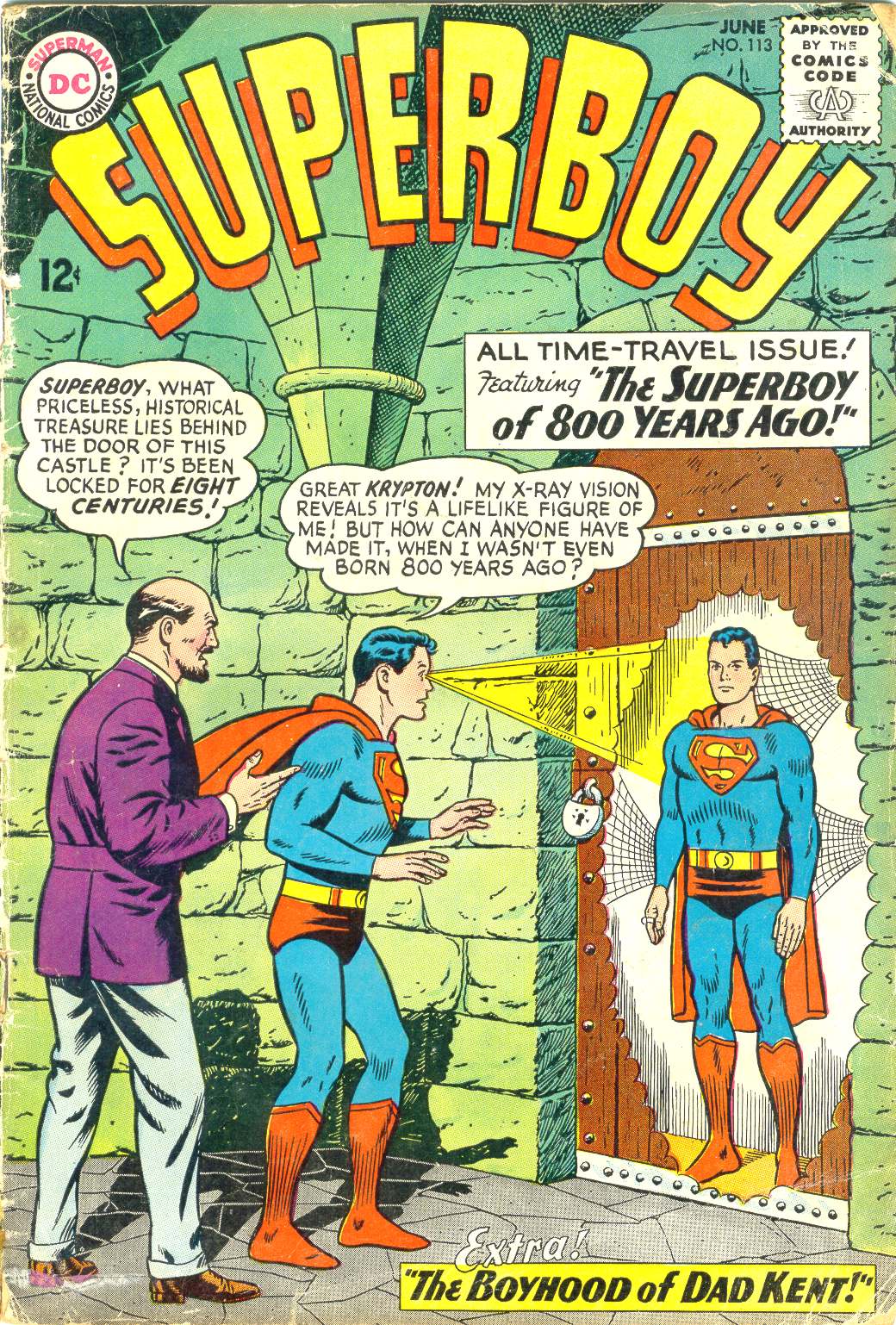 To this end, Curt began working 14-16 hours a day, seven days a week. He took on almost anything that DC would give him. Along with BOY COMMANDOS, Curt was doing TOMMY TOMORROW, GANGBUSTERS, and had begun doing SUPERBOY covers. His major complaint was that Mort Weisinger never appeared happy with his work and would invariably request changes in the finished art.
By 1951, Curt felt that he had had enough. His work was becoming stressful to the point that it was affecting his home life; his temper was short, and he had developed migraines. For his own health, he decided to quit DC to join a small advertising studio that had several toy accounts. While he enjoyed the agency work, his income shrank to $50 a week, a far cry from his DC salary. Panicking after one month at the agency, he went back to DC.
They welcomed him with open arms, but Curt soon felt the migraines returned. He hadn't had any headaches during that month away so Curt concluded that his headaches were due to Mort Weisinger, both directly and in the way he responded to Weisinger's criticisms. Curt decided that he had to stand up to Weisinger and tell him what he thought. To his surprise, Weisinger responded favorably, and the headaches disappeared.
Contrary to some reports, Swan's only formal art training was a two-month stint at the Pratt Institute studying illustration in 1952. He started the course to enhance his abilities in composition but quit when the travels from New York to his New Jersey home became too tiresome. Otherwise, Swan's ability was completely natural and self-taught.
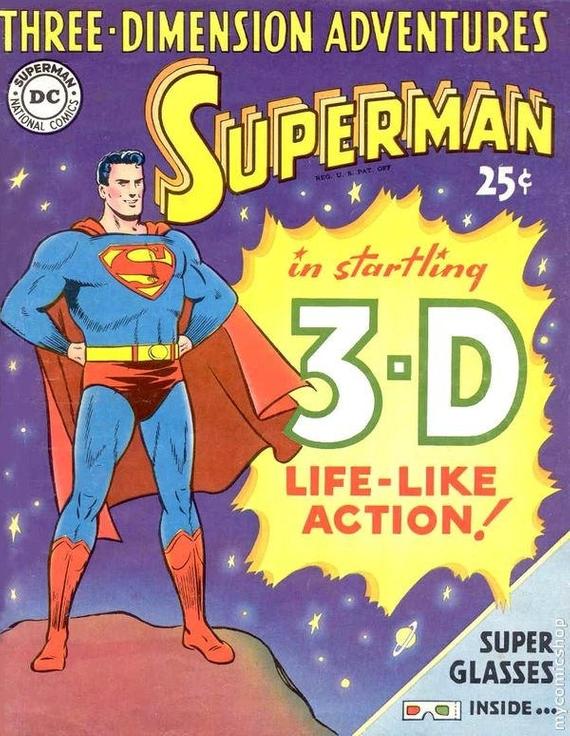 In 1952, Swan was assigned to do an occasional fill-in on SUPERMAN when Wayne Boring had other obligations. Swan had been working on SUPERBOY and JIMMY OLSEN and this seemed to be a natural extension of that work. However, in 1953, Swan got a big break when Weisinger decided that he wanted to put out a 3-D Superman book (called 3-Dimension Adventures), and he wanted it out in a hurry. Boring, Plastino and Swan were all called in to work on the project, and Weisinger liked Swan's work on the book.
In 1955, following a disagreement with Boring and Weisinger over page rates, Curt was called in to do several issues of SUPERMAN. Whether Weisinger had maneuvered this or not, he took the opportunity to have Swan change SUPERMAN, and begin the look that characterized the character for over thirty years. From early on, Weisinger told Swan to soften the lantern jaw, that had become a trademark of Boring's SUPERMAN, to make him more handsome. He also told Swan to accent the muscles of SUPERMAN to make him more powerful and make the art more illustrative and less "cartoony".
 From 1955 on, SUPERMAN was Curt Swan's character. His art defined SUPERMAN for the next thirty years. The lantern jaw was gone, the ironing board flying was gone. All of this was replaced by Swan's realistic, expressive, human faces, and fluid, even graceful, forms flying through the sky. When it came time for Warner Brothers to do a decent film of SUPERMAN, it was Swan's figure that Christopher Reeve emulated. It was that grace, that strength, that humanity that Swan brought to the character.
When I have asked Curt whether he had a "model" for his SUPERMAN, he said that he was a combination of many things. Part Johnny Weismuller, part Raymond RIP KIRBY and part George Reeves, "although I didn't want him to look exactly like Reeves, even though I got a profile or two correct". "But more", he said, " I drew him to look like a nice guy, someone you'd want on your side." And, to my mind, it was this character that made Swan's SUPERMAN all the more appealing. When Clark looked at you, and winked, it was as if he were letting you in on the big joke that no one in the story could see except you and him. Swan made SUPERMAN come to life for the reader.
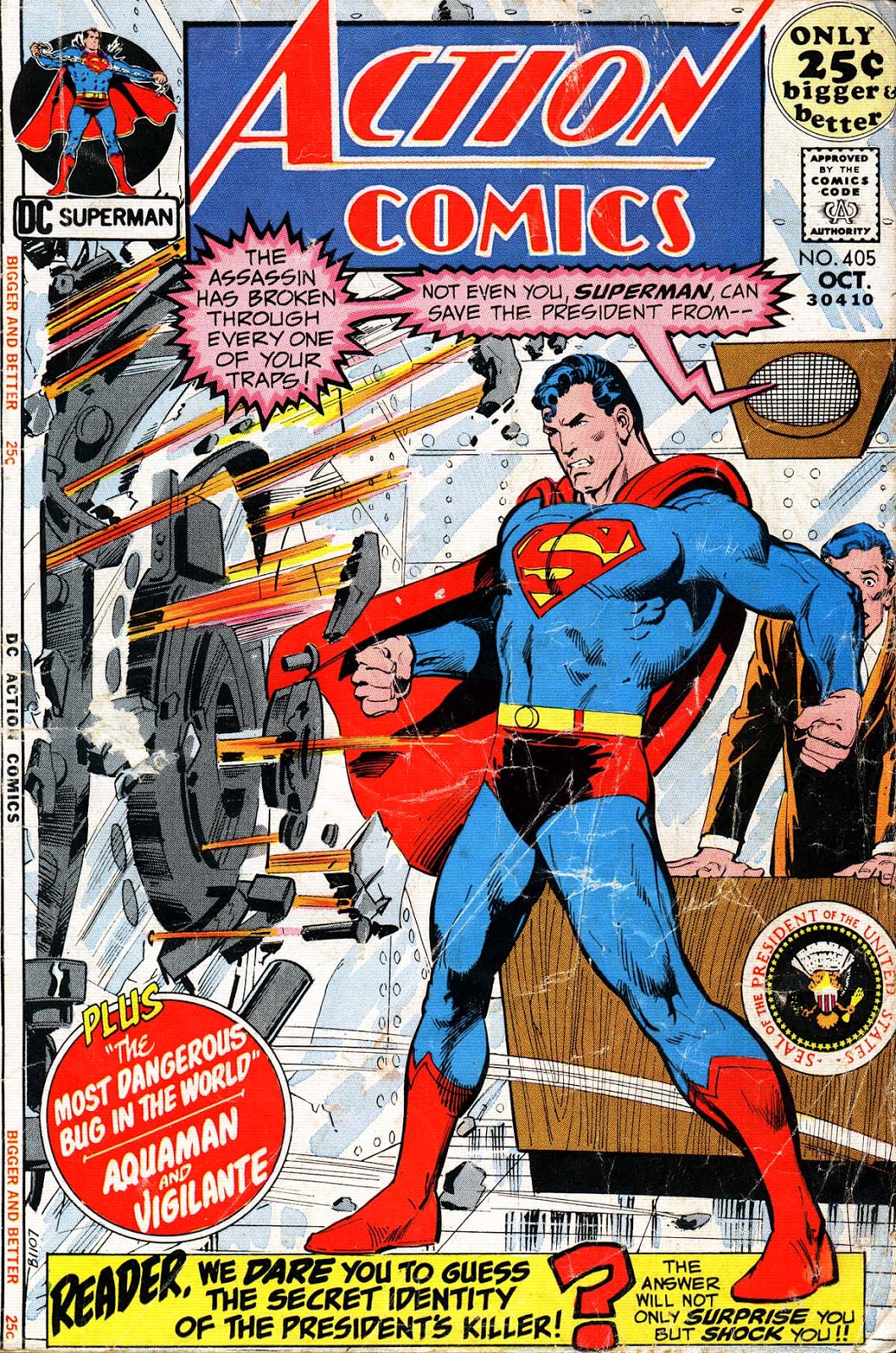 Over the years, Curt had many artists ink his work. For many collectors and aficionados of comic art, George Klein and Murphy Anderson spring to mind as two of the better inkers of Curt's work. However, Curt found Al Williamson's inks to be the best. "For history", Curt said, "Al had a flair that the others didn't have."
When Denny O'Neil took over the SUPERMAN writing chores, he knew that there would be no problems with the art. O'Neill said, "Swan was the best, a quiet man and not much noticed and consequently underrated because he never caused a fuss; he simply delivered anything an editor asked for, met any challenge and did it with the reliability of the tides."
Curt "retired" from SUPERMAN in 1986. In the years that followed, he worked on other assignments (TEEN TITANS, several DC annuals and SWAMP THING), always with the grace that we had come to know and expect. However, retirement was not always kind to Curt Swan. While he never complained openly to fans, the freelance comic artist of that time period rarely planned well enough to retire financially secure. Swan needed to continue working, not only for his sanity but to survive. Unfortunately, his assignments at DC became fewer and fewer, he drank more frequently and his marriage dissolved.
I once asked Curt about his work ethic. He told me that he picked up a script, did the art, turned it in, picked up his check and another script and went home to start work. But there was more to it than that. But more than a simple workman, the artist Curt Swan said, "I get more enjoyment out of seeing a young one's smiling face staring into a comic book that I drew than I could possibly get out of having all of the money, praise and accolades in the world." SUPERMAN could not have said it better.
Curt Swan passed away in his sleep on June 16, 1996. He is survived by his former wife Helene, daughters Karen and Cecilia and son Christopher.
COMMENTARY: A FINE WAY TO SAY THANKYOU
In 1985, the DC editors found themselves at a quandary. The popularity of many of their characters was low, and in the battle of the ever dwindling readership, Marvel was amassing quite a gap in popularity. The once powerful juggernaut of the whole DC line, SUPERMAN, was now considered passé. Not hip, not cool: old fashioned. Unlike Wolverine, Superman was considered too nice. Unlike Peter Parker, Clark Kent was too wimpy and didn't quite have the Jungian angst of Spiderman's alter ego. And this was without mentioning that fans often considered the art old fashioned. So, a remedy had to be found... and quickly.
Following the popularity of John Byrne and Terry Austin on X-MEN, and later on FANTASTIC FOUR, Byrne had asserted that he would soon leave FF. looking for other projects. DC approached Byrne to work for DC. Ostensibly, the powers that be at DC felt that bringing Byrne on board would increase the sagging sales on any title that he worked on. Making the same mistake that DC has made time and time again, the editors felt that it was the creator, rather than the character that brought readers to comics. As Marvel has shown, it doesn't matter who draws or writes X-MEN, it will sell. Regardless, DC approached Byrne and basically told him that he could pick the project he wanted, and they would give him the latitude to handle things however he wished.
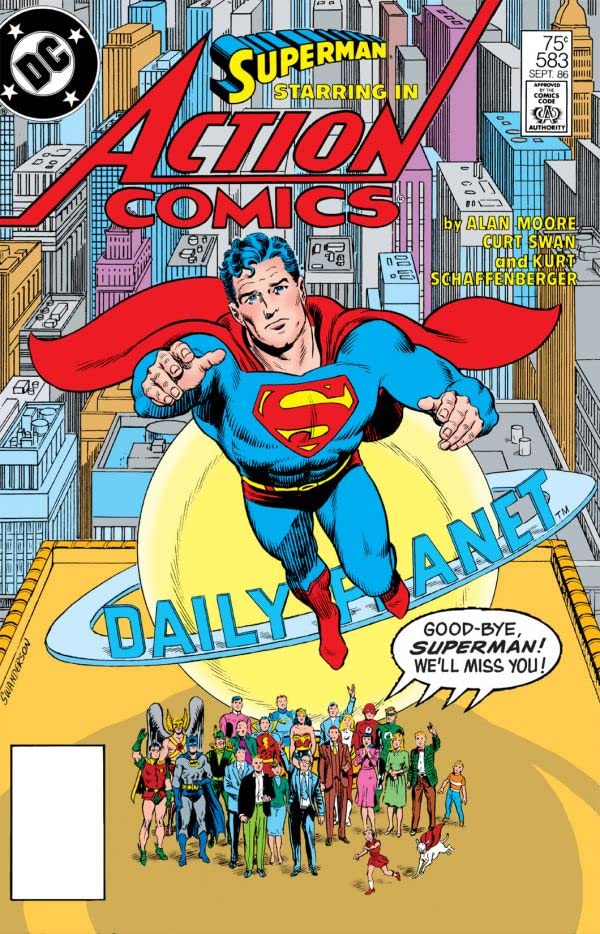 Byrne chose SUPERMAN, but only if he could start over. By that he meant that DC should tie up all of their existing plots and shorelines with the character, and allow Byrne to begin again with a new SUPERMAN #1. This was a historic move by DC on several fronts. Not only did DC completely hand over their premier character and allow a second SUPERMAN #1, but they allowed Byrne to "redesign" SUPERMAN as he saw fit. Alan Moore, Curt Swan, Murphy Anderson, Kurt Schaffenberger and George Perez produced two of the nicest SUPERMAN comics ever produced in SUPERMAN #423 and ACTION COMICS #583, a story called WHATEVER HAPPENED TO THE MAN OF TOMORROW?. And that was that. SUPERMAN became Byrne's.
Above all of this, the most striking thing that DC did was to completely turn their back on the one man that had defined Superman for three decades. As DC had done with Jerry Siegel and Joe Shuster in 1948, they closed the door and turned out the lights on the creator that had defined their whole line. With no real thanks, no pomp nor circumstance, DC simply relieved Curt of his artistic duties on SUPERMAN. Curt Swan who had drawn Superman in ACTION, LOIS LANE, JIMMY OLSEN, SUPERMAN and WORLD'S FINEST, and drew SUPERBOY in ADVENTURE COMICS who was the quintessential Superman artist of the 1960s, '70s and 80s. He became was just another victim of the 1980s implosion. Gone.
I mentioned Swan's work ethic earlier. But while Curt Swan was a workman artist, he was, none-the-less, an artist. And, artists have egos. Like any human being, they enjoy being appreciated. One does not have to have an advanced degree in psychology to surmise that Swan must have been hurt by this turn of events. He must have felt rejected and very depressed.
So, in 1986, John Byrne inaugurated HIS SUPERMAN with a six-issue MAN OF STEEL miniseries, in which he systematically introduced such new characters into the SUPERMAN universe as Lex Luthor, Lois Lane, Batman, and the Bizarros. Sadly, to this writer's mind, there weren't that many changes from the old character to make it any different or better. Perhaps Superman was not as powerful as before, and more emotionally vulnerable. His parents, John and Martha Kent were still alive, where they had not been in the previous incarnation, and Krypton was very different (as Wendy Pini once said, "Byrne's Krypton was a planet that should have blown up!"), but the characters, themselves were essentially the same. This was followed by the second SUPERMAN #1.
The advance publicity of the New SUPERMAN gave DC a lot of attention, not unlike the Death of Superman stories did years later. Certainly, those issues sold well enough, and made DC extremely happy. Byrne however, lost the spark for Superman and left with issue #22, although he drew only 19 of them. Like the X-MEN and FANTASTIC FOUR before, Byrne had said what he had to say and was done with the character. That really didn't take long. Curt Swan, on the other hand had given thirty years to one character. He was not permitted to decide when he was done.
Still Curt Swan plodded on. Curt made no pretense that he was a genius, a Michelangello, or the next savior of comics. What he did was a job. He was a professional artist, pure and simple. Swan knew that he had a family to feed and that drawing put food on the table. Even at the age of 66, Swan couldn't really stop. He had to continue working to survive. Ultimately, what Byrne did was a job. Like anyone that works at a 7-11 or a Jiffy Mart, Superman was one of many jobs Byrne tired of and left. Sadly enough, in real life SUPERMAN could not so what he did so often in the comics; he could not arrive in the nick of time to save Curt Swan.
Copyright © 1997-98, Wallace Harrington (wwh27539@mindspring.com)
Used with kind permission from the author.